
Thursday, 19 May 2016


Video installation essay
Video installation
Video installation art is used to affect the audience, how? By combining video technology with installation art and making use of all aspects of the surrounding environment.
Christian Marclay

Christian Marclay is a video installation artist, one of his known projects is called “The Clock”, a 24 hour montage that works as an actual clock. This means that at some point in the montage it is going to be the same time as the audience's time. It took him 2 years to find the perfect movie scenes and to edit it.

The reason he did this video is because he has a certain obsession with time, he talks about how this montage has to do with time passing and mortality.
We have became obsessed with time in the past centuries, and people would go crazy without time.
There are two different types of time:
- Symbolic time which is marked by clocks
- Imaginary time which is a subjective idea of how long things last.
It is said that you know that you’re wasting time when you’re too aware of it.
‘The Clock’ makes us aware of the passage of time.
It is considered one of the most perfectly and completely created pieces of conceptual art. This film puts time together in a really unique way because the montage of different films and Tv shows that are included in it have different storylines so it makes it a real work of art.
I think that his work is really special, and as a viewer it becomes something really strange to look at the time in such a way, it gives away anxiety but also some sort of satisfaction. I believe it is so special because of all the time he put into it and how many different scenes are found in this 24 hour film.
Sam Taylor-Wood

Sam Taylor-Wood is a video installation artist who now became a mainstream director who directed a movie about John Lennon called ‘Nowhere boy’. One of her known installation videos is called ‘A little death’ and it follows the layout of a traditional still life painting as well as all the decay around it.

‘A Little Death’ is a video of a rabbit whilst disintegrating. Sam did this for people to see how death works, although if she used a human body she would have gotten in trouble, so she had no choice but to use a rabbit corpse.
The video shows in a simple image a dead rabbit which is decomposing quickly, whilst right next to it, a peach lays there, a static object representing, creates contrast in between still life, and the quick rotting transformation. It shows how fast a living thing can just disappear and become nothing.
She proves that you can take the most simple things, with some adding of effects can create an extraordinary film.
It was inspired on paintings from the 17th century that revealed the story of nature’s life in such a beautiful way.
I think that Sam Taylor-Wood’s work of art has a really interesting message to it, it represents both aspects, this being life and death and show how something that once had life can disappear in such way, and how life is delicate and how thin the line that separates life and death really is.
Tony Oursler

Tony Oursler is and has been a video installation artist since the 1970’s. His works of art are mostly known because he explores technology’s effect on the human mind. Besides using projectors most of the time he also uses a lot of bizarre effects, such as a talking streetlight or a five dollar bill with a talking Abraham Lincoln.

One of his works of art is called ‘Bound interrupter’ and contains a lot of nonliving objects with face projections on them.
It is a really strange but engaging installation, it also contains a lot of different things in it to pay attention to. The projector faces talk over each other and it becomes something interesting to watch.
His art installations often contain a lot of colour in it as well as truth. What does this mean? Well, a lot of artists tend to hide things that would make their art look fake, but instead Oursler leaves the truth, such as video projectors, in full view.
He combines technology with creativity and creates illusions that can be amazing to the mind.
Tony has created a lot of exceptional work with different humour to it, some of them are really funny and are really enjoyable whilst some of the others can really play you mind games.
I personally think that he is an incredible artist and has an original point of view.
Video art installations are something really interesting because it allows you to, if creating one, go past the boundaries of the mind, and if watching one, allow your mind to submerge in it. There are many different aspects to it and is fascinating.
Thursday, 21 April 2016
Traditional photographic processes
Traditional photographic processes
This type of photography was used before digital photography was invented, and although there are people that still do this, it has become less popular.
This type of photography was used before digital photography was invented, and although there are people that still do this, it has become less popular.
The traditional photographic processes include:
- negatives
- enlarger
- developer
- stop
- fixer
- Printing

A negative (usually made out of plastic or glass) is an image that reproduces the bright portions of the photographed subject as dark and the dark parts as light areas.
2.

An enlarger is a device for producing a negative larger than the original, meaning that by putting the negatives on the lens, it projects them onto the paper positioned on the easel.
3.

When developing, you have to be really careful because this involves different chemicals, and not only it is dangerous health wise but also, if you happen to leave your photos in this chemicals for too long, your photos will turn to black paper.
Developer: It makes the negatives appear on paper
4. Stop: It makes the photograph stop developing
5. Fixer: It makes the photograph not fade away
6.

The printing process is when you hang up your photos in the dark room to let them dry.
Photography evaluation
Evaluation: Photography
For the final photography project we had to shoot a series of 10+ photos of our choice, later on we would have to decide in which magazines this photos could fit in.
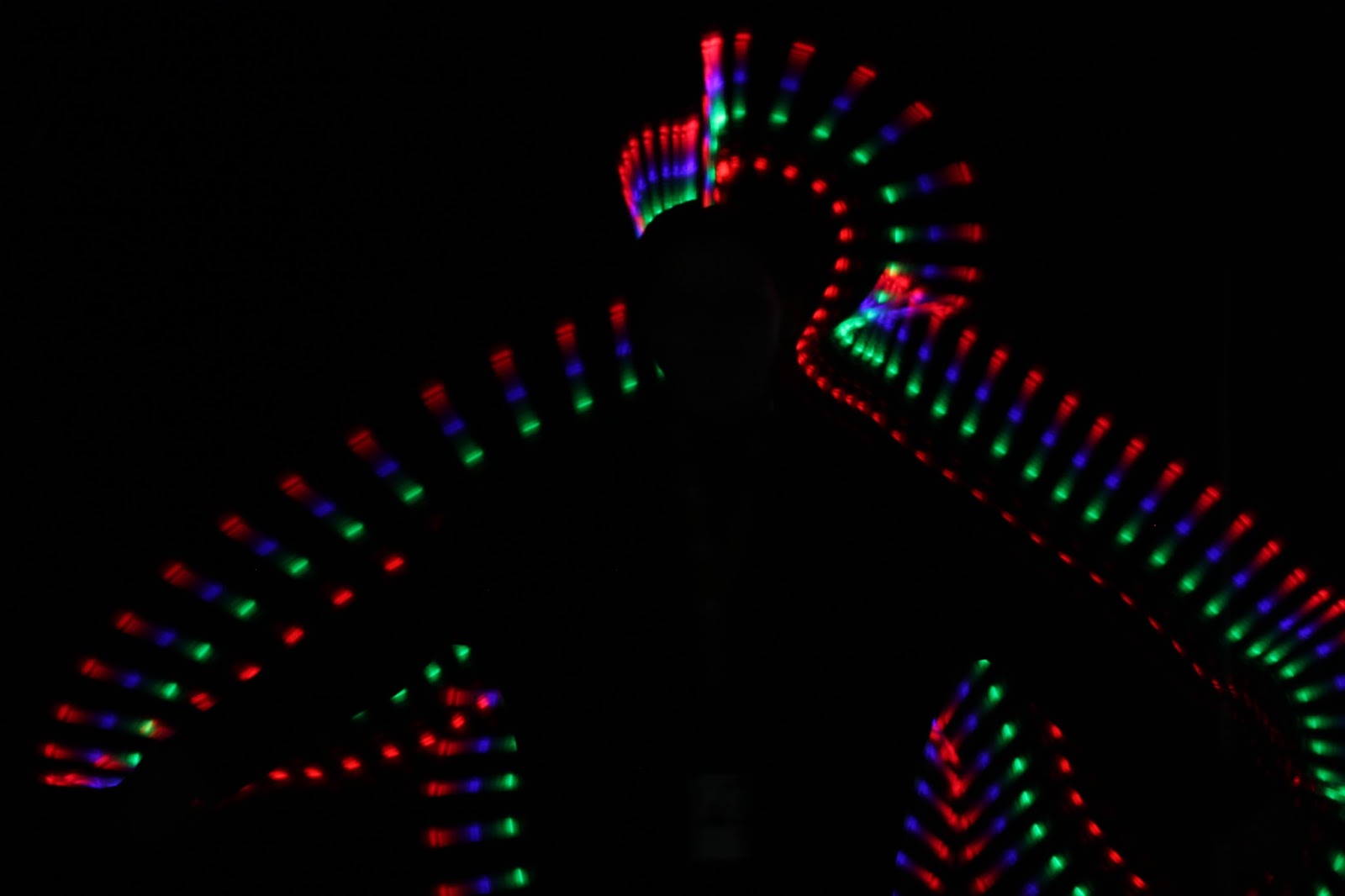
I chose light graffiti because its simplicity looks beautiful. At the start I wasn’t sure what I was going to base it on, but I thought of something that could be interesting. I thought of a concept called ‘First Thing’, this means that I asked people to draw or write the first thing that comes to their mind.
Things that went well
Some of the things that I got good feedback on where firstly my ‘first thing’ concept due to the fact that it gets people into others people’s minds and it becomes more personal. Secondly, although the use of light wasn’t extremely varied I did experiment with different lights and I am happy with the outcome. Last, I was told that the fact that I got different people involved and it became not only my project but everyone else’s as well.
Things I can improve on
Although I had quite a few people helping me out with this project, I was told that I should have asked help from more and different people, so the photos could variate. Why? Because one of the issues I had while shooting was that everyone came up with the same drawings, it was really basic; hearts, stars, writing love, but if I would have asked people from different ages and genders then I could have achieved something better. Also, I was told that although my photos looked nice, using more colour and different backgrounds could have helped due to the fact that the photos looked plain; it was a plain black background and only two of the photos had colour in it.
For next time
After getting feedback, I decided I would try to re-shoot the photos and change some things, such as background and lighting. By doing this I realised that this technique can be used in many different ways in order to achieve professional looking photos. This is what I did:


Friday, 15 April 2016


Friday, 11 March 2016
Final project
Equipment used:
- Canon 1100
- 32gb SanDisk
Settings:
Manual
F-stop: 9.0
ISO: 100
Shutter speed: 20''
'First Thing'
For this project I asked people to draw or write the first thing that came into their minds and this is the result.







Subscribe to:
Posts (Atom)